You Won’t Believe What Lille’s Urban Spaces Hid From Me
Lille often flies under the radar, but its urban spaces? Absolutely mind-blowing. Wandering through cobbled squares and converted industrial zones, I felt like I’d stumbled into a secret corner of Europe. This isn’t just a city—it’s a living canvas where history, design, and daily life blend seamlessly. From buzzing market halls to silent green oases, Lille redefines what urban charm really means. There’s a rhythm here, subtle but steady, that invites you not just to visit, but to belong. Every alleyway, every park bench, every sunlit plaza feels intentional—not curated for tourists, but crafted for people. In a continent brimming with celebrated capitals, Lille remains quietly confident, revealing its magic only to those who slow down and look closely.
First Impressions: Stepping Into Lille’s Urban Rhythm
Arriving in Lille by train, there’s no grand architectural flourish to announce your entrance. No towering cathedral spire or sweeping boulevard. Instead, the city reveals itself in layers—brick by brick, sound by sound. The Gare Lille Flandres station opens directly onto Rue Faidherbe, a tree-lined artery that gently ushers visitors into the heart of the city. Immediately, the sensory tapestry begins: the scent of freshly baked waffles from a corner bakery, the rhythmic clatter of bicycle wheels on cobblestones, the low hum of conversation drifting from sidewalk cafés. It’s not spectacle that greets you—it’s life in motion, unscripted and authentic.
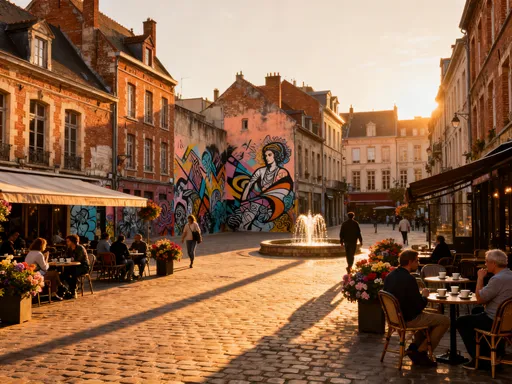
Just a short walk from the station lies Place du Général de Gaulle, often called the Grand Place, the undisputed social nucleus of Lille. Unlike the formal symmetry of Parisian squares or the monumental scale of Brussels’ Grand-Place, Lille’s central square feels intimate, almost domestic. Its uneven cobbles, remnants of centuries past, slope gently toward the ornate Vieille Bourse, a 17th-century trading hall with a courtyard so enchanting it feels like stepping into a Flemish painting. The surrounding cafés spill onto terraces, their chairs arranged not for maximum occupancy, but for conversation—angled toward one another, encouraging connection.
What strikes most about Lille’s urban rhythm is how effortlessly old and new coexist. A street artist sprays a vibrant mural onto a centuries-old façade, while nearby, a sleek glass tram glides silently past. This harmony isn’t accidental; it’s the result of decades of thoughtful urban planning that prioritizes continuity over contrast. The city doesn’t erase its past to make way for the future—it integrates them. Buildings retain their original materials—Flemish red brick, carved stone, wrought iron—while interiors are adapted for modern use. This architectural dialogue creates a sense of depth, a city that has lived and evolved, not been rebuilt from scratch.
The Grand Place functions not just as a visual centerpiece but as a social conductor. Locals meet here for morning coffee, students gather during lunch breaks, and families stroll in the evenings. It’s a space designed for lingering, not just transit. Unlike plazas in other European cities that feel ceremonial or reserved for special occasions, Lille’s main square pulses with everyday energy. The absence of cars, enforced by pedestrianization policies, amplifies this effect. Without the roar of engines, the human soundscape becomes dominant—the laughter of children, the clink of glasses, the occasional street musician’s melody. This acoustic clarity is a subtle but powerful part of urban comfort, one that many cities overlook in favor of grandeur.
The Heartbeat of Public Squares: Where Life Unfolds Naturally
If the Grand Place is Lille’s social heart, its smaller squares are the capillaries that carry life to every neighborhood. These spaces—often tucked between narrow streets and hidden behind historic façades—are where the city’s true character emerges. Take Place aux Oignons, a modest square named after the onion sellers who once gathered here. Today, it hosts a weekly farmers’ market, but even on quiet days, it remains a stage for spontaneous human interaction. An elderly couple shares a bench beneath a chestnut tree. A delivery cyclist pauses to tie his shoe. A group of friends laughs over coffee at a corner café. There’s no programmed activity, no official event—just the quiet theater of daily life.
What makes these squares so effective is their design philosophy: they are built not for spectacle, but for habitation. Benches are placed to catch sunlight, often arranged in clusters to encourage conversation. Trees are strategically planted to provide shade in summer and allow light in winter. Lighting is soft and warm, not blindingly bright, preserving a sense of intimacy after dark. These details, seemingly minor, collectively shape how people experience public space. When a bench is comfortable and well-positioned, people stay longer. When lighting feels welcoming, more people use the square at night. When greenery is abundant, stress levels drop. Lille understands that urban design is not just about aesthetics—it’s about psychology.
Place Rihour offers another example of this human-centered approach. Once the site of a medieval castle, it now serves as a vibrant public plaza, home to the weekly flower market and a favorite spot for families on weekends. The square’s surface is paved with contrasting stone patterns, creating visual interest without compromising accessibility. Playful fountains invite children to splash in summer, while surrounding terraces offer seating with views of the action. Unlike sterile, overly managed plazas found in some modern developments, Place Rihour feels alive because it allows for messiness—chalk drawings on the ground, dogs off-leash in designated zones, impromptu games of boules. This tolerance for spontaneity is a hallmark of Lille’s urban culture.
The city’s approach to public space reflects a deeper philosophy: that urban environments should serve people, not vehicles or commercial interests. This is evident in the way squares are protected from traffic, preserved from overdevelopment, and maintained with care. Local authorities invest in regular cleaning, seasonal planting, and community programming, ensuring these spaces remain inviting year-round. The result is a network of small, interconnected oases where residents feel ownership and pride. In an era when many cities struggle with social fragmentation, Lille’s squares stand as quiet proof that well-designed public spaces can foster connection, trust, and belonging.
From Factories to Freedom: Adaptive Reuse in Urban Design
One of Lille’s most remarkable urban transformations lies in its industrial heritage. Once a powerhouse of textile manufacturing, the city faced economic decline in the late 20th century as factories closed and jobs disappeared. Rather than demolishing these relics, Lille chose a different path: reinvention. The most striking example is EuraTechnologies, a sprawling innovation campus housed in the former Cité Scientifique textile factory. Walking through its vast, light-filled halls, it’s easy to feel the weight of history—the exposed brick walls, the original steel beams, the rhythmic pattern of windows—now repurposed for a new era of digital entrepreneurship.
This adaptive reuse is more than an architectural achievement; it’s a cultural statement. By preserving the bones of old factories, Lille honors its industrial past while embracing the future. The transformation of these spaces reflects a deep understanding of urban identity—growth doesn’t require erasure. At EuraTechnologies, startups, tech incubators, and research labs now occupy what were once spinning rooms and storage warehouses. The contrast is poetic: where cotton once spun, ideas now do. Yet the connection to the past remains visible in every detail, from the preserved machinery displayed as art to the industrial-chic interiors that celebrate raw materials over polish.
The success of EuraTechnologies has inspired similar projects across the city. Former warehouses in the Wazemmes district have been converted into artist studios, cultural centers, and community workshops. A disused railway depot now hosts pop-up markets and performance spaces. These interventions are not isolated acts of preservation but part of a broader urban regeneration strategy. The city collaborates with architects, urban planners, and local residents to ensure that redevelopment serves the community, not just investors. This participatory approach prevents gentrification from displacing long-time residents, maintaining the social fabric even as the physical landscape evolves.
What sets Lille apart is its ability to balance authenticity with innovation. Unlike cities that retrofit historic buildings into luxury apartments or chain stores, Lille prioritizes function and inclusivity. These repurposed spaces are not museum pieces—they are lived-in, used, and accessible. Artists rent studios at affordable rates. Startups benefit from subsidized incubator programs. Community groups book event spaces at low cost. This democratization of urban space ensures that regeneration benefits everyone, not just the privileged few. In doing so, Lille offers a model for post-industrial cities worldwide: progress need not come at the cost of memory.
Green Threads: Parks and Nature Woven Into the City
Despite its dense urban core, Lille breathes. Green spaces are not afterthoughts or distant destinations—they are woven into the city’s very fabric. The most prominent of these is Parc de la Citadelle, a vast 70-hectare expanse designed by the legendary military engineer Vauban in the 17th century. Originally built as a defensive fortress, the park has evolved into Lille’s green lung, offering meadows, wooded trails, ornamental gardens, and even a small zoo. What’s remarkable is its accessibility: just a 15-minute walk from the Grand Place, yet feeling worlds away.
The park’s design reflects a timeless understanding of human needs. Wide, gravel paths accommodate strollers, joggers, and cyclists, while shaded benches invite quiet contemplation. Children run freely in designated play areas, and dog walkers follow marked trails. The lake, home to ducks and swans, becomes a focal point for relaxation, with visitors often pausing to feed the birds or simply watch the water ripple in the breeze. Unlike manicured gardens that discourage interaction, Parc de la Citadelle encourages engagement—grass is meant to be sat on, trees are climbed (within reason), and nature is touched, not just observed.
But Lille’s green network extends far beyond this central park. Smaller oases like Jardin des Plantes and Square Général de Castelnau bring nature into residential neighborhoods, ensuring that no resident lives more than a 10-minute walk from green space. These pockets are carefully designed to serve diverse needs: community gardens allow residents to grow their own vegetables, sensory gardens cater to people with visual impairments, and quiet zones provide refuge for those seeking solitude. The city also invests in biodiversity, planting native species and creating habitats for pollinators, reinforcing the idea that urban nature should support life, not just look pretty.
This commitment to green infrastructure is not merely aesthetic—it’s a public health strategy. Studies have shown that access to nature reduces stress, improves mental well-being, and encourages physical activity. Lille’s planners recognize this, integrating green spaces into broader urban policies. Rain gardens and permeable pavements help manage stormwater, reducing flooding risks. Tree-lined streets lower urban temperatures, combating the heat island effect. Rooftop gardens on public buildings improve insulation and air quality. These ecological benefits are quietly embedded in the city’s design, making sustainability a lived experience rather than a slogan. In Lille, nature isn’t an escape from the city—it’s an essential part of it.
Walking the City: Pedestrian Priorities and Human-Scale Design
One of the most immediate pleasures of Lille is how easy it is to navigate on foot. Unlike many European cities where historic centers are encircled by traffic-choked ring roads, Lille has made a deliberate choice to prioritize pedestrians. The city center is largely car-free, with traffic-calmed zones, widened sidewalks, and abundant crosswalks. This isn’t just convenient—it’s transformative. When streets are safe and pleasant to walk, people do more of it. They linger. They explore. They discover.
The city’s walkability stems from a philosophy of human-scale design. Buildings are typically four to five stories high, creating a sense of enclosure without overwhelming the pedestrian. Street widths are modest, reducing crossing distances and making eye contact with neighbors easier. Signage is minimal and unobtrusive, allowing the architecture and street life to take center stage. Trees are planted at regular intervals, providing shade and softening the urban landscape. These choices, individually subtle, collectively create an environment that feels safe, legible, and inviting.
Complementing the walkable streets is the V’Lille bike-sharing system, one of the most successful in France. With hundreds of stations across the city and affordable pricing, it offers a flexible alternative to cars. Bikes are sturdy, equipped with baskets and lights, and the system integrates seamlessly with public transit. Cyclists share the road with care—dedicated lanes are common, and drivers are accustomed to sharing space. This multimodal approach reduces congestion and pollution while increasing mobility for all residents, including those who may not own a car.
What’s most impressive is how these pedestrian-friendly policies are sustained over time. Lille doesn’t treat walkability as a temporary experiment but as a core value. Urban planning decisions—from new developments to street renovations—are evaluated through the lens of accessibility and comfort. Public consultations ensure that residents’ voices are heard, and data on foot traffic and air quality inform ongoing improvements. This long-term commitment has made Lille a leader in sustainable urbanism, proving that cities can be both efficient and humane.
Markets as Urban Anchors: Commerce With Character
No exploration of Lille’s urban spaces would be complete without visiting Marché de Wazemmes, one of the largest and most vibrant markets in northern France. More than just a place to buy food, it’s a cultural institution, a living room for the neighborhood, and a testament to the power of local commerce. Every day except Monday, the square and surrounding streets come alive with stalls selling everything from fresh produce and regional cheeses to textiles and second-hand books. The air is thick with the scent of spices, roasting meat, and ripe fruit—a sensory symphony that draws people in from across the city.
What sets Wazemmes apart is its authenticity. Unlike tourist-focused markets that feel staged or sanitized, this one thrives on spontaneity and diversity. Vendors call out in French, Arabic, and Flemish, reflecting Lille’s multicultural population. Shoppers haggle, laugh, and exchange recipes as they fill their baskets. Children weave through the crowds, chasing bubbles from a street performer. The market isn’t just transactional—it’s relational. It builds community through repeated interactions, shared rhythms, and mutual recognition. Regulars know their fishmonger by name; newcomers are welcomed with samples and advice.
The market’s physical layout reinforces this social function. Stalls are arranged in a loose grid, allowing for easy navigation but also encouraging exploration. Narrow aisles create intimacy, while open plazas provide space for gatherings. Permanent structures house butchers, bakers, and specialty shops, while temporary tents accommodate seasonal vendors. This mix of permanence and flexibility ensures that the market evolves with the seasons and the community’s needs. During winter, mulled wine stalls appear; in summer, fresh berries dominate the stands.
Wazemmes also exemplifies Lille’s commitment to supporting small-scale, local economies. The city provides infrastructure, security, and administrative support, ensuring that vendors—many of them independent artisans or farmers—can operate sustainably. This contrasts sharply with the rise of impersonal supermarkets and online shopping, where human connection is minimized. In Lille, commerce is not a convenience but a celebration of place, people, and tradition. The market isn’t just surviving—it’s thriving, a living proof that urban spaces can be both economically viable and socially enriching.
Nightlight: How the City Transforms After Dark
As daylight fades, Lille undergoes a subtle but profound transformation. The city doesn’t shut down or light up with garish neon; instead, it softens. Warm, low-intensity lighting illuminates courtyards, archways, and tree-lined avenues, creating a gentle glow that feels intimate rather than intrusive. Facades of historic buildings are subtly uplit, highlighting architectural details without overwhelming the streetscape. Unlike cities that rely on bright signage and flashing advertisements, Lille’s nighttime aesthetic is one of restraint and elegance.
This thoughtful approach to urban lighting enhances safety without sacrificing atmosphere. Well-lit sidewalks and crosswalks ensure visibility, while shaded seating areas maintain a sense of privacy. Public squares remain active but never crowded, hosting small concerts, outdoor film screenings, or quiet gatherings over wine. The absence of loud music or rowdy nightlife preserves a calm energy, making the city feel accessible to all ages and lifestyles. Parents stroll with children, elderly couples enjoy evening walks, and solo travelers sit reading on benches—each finding their own rhythm in the night.
The city’s lighting strategy is part of a broader philosophy: that urban spaces should serve diverse needs at all hours. Rather than designating areas exclusively for daytime or nighttime use, Lille creates flexible environments that adapt naturally. A market square by day becomes a gathering place by night. A park hosts yoga sessions in the morning and stargazing events in the evening. This continuity of use fosters a sense of ownership and safety—when spaces are occupied throughout the day, they feel less vulnerable at night.
Lille’s after-dark character also reflects its cultural values: moderation, conviviality, and respect for shared space. There are no all-night clubs blasting music into residential areas, no overcrowded bars spilling onto sidewalks. Instead, the city offers low-key pleasures—intimate cafés, bookshops with evening hours, neighborhood bistros with candlelit terraces. This balance allows for celebration without excess, for activity without chaos. In an age when many cities equate nightlife with intensity, Lille reminds us that beauty can be quiet, and joy can be gentle.
Lille doesn’t shout for attention, but it listens. Its urban spaces aren’t designed to impress—they’re built to live in. From repurposed factories to neighborhood markets, every corner reflects a deep understanding of human needs. The city’s strength lies not in monuments or landmarks, but in the quiet details: the width of a sidewalk, the placement of a bench, the way sunlight filters through trees in a park. These elements, often overlooked, shape daily experience more profoundly than any grand gesture.
In an era when cities around the world grapple with congestion, isolation, and environmental strain, Lille offers a quiet lesson: great urban life isn’t about scale, but soul. It’s about creating spaces where people feel seen, where nature is nurtured, where history is honored, and where community can flourish. You won’t believe what Lille’s urban spaces hid from you—because they weren’t hiding at all. They were simply waiting, patiently, for you to slow down and notice.