You Won’t Believe This Hidden Eatery Near Boudhanath
Tucked just off the prayer-wheel path near Boudhanath Stupa, there’s a tiny place most tourists walk right past. I stumbled on it by accident—and honestly, it changed my whole Nepal trip. No signs, no menu board, just incredible food made the same way for decades. This isn’t just a meal; it’s a quiet connection to real Nepali culture. If you’re chasing something beyond the usual tourist bites, this hidden gem is why you travel.
The Heartbeat of Boudhanath
Boudhanath Stupa stands as one of the most sacred Buddhist sites in Nepal, a UNESCO World Heritage Site that pulses with quiet reverence and spiritual energy. Located on the eastern outskirts of Kathmandu, it draws pilgrims, monks, and travelers from across the globe who come to walk the kora, the circumambulation path that circles the great white dome crowned with golden eyes. The air here is thick with the scent of burning juniper and sandalwood, while the soft hum of mantra chanting blends with the rhythmic click of prayer beads and the steady turn of brass prayer wheels.
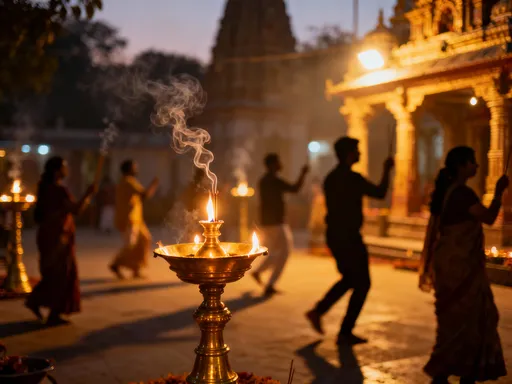
Every morning at dawn, the stupa awakens with a gentle yet powerful rhythm. Monks in maroon and saffron robes glide silently along the path, their hands folded in silent prayer or turning the wheels with deliberate care. Local families arrive with offerings—butter lamps, flowers, and rice—as part of daily rituals passed down through generations. This is not a performance for visitors; it is a living, breathing spiritual practice that continues with or without an audience. The presence of this devotion creates a deeply grounding atmosphere, one that invites mindfulness and reflection.
Amid this spiritual rhythm, a different kind of journey unfolds—one of cultural discovery. Just beyond the main plaza, where the crowds thin and the alleyways narrow, lie quiet corners untouched by mass tourism. These spaces hold the pulse of everyday life in Kathmandu: women balancing baskets on their heads, children chasing each other between prayer flags, and elders sipping tea outside small family-run shops. It is in these unassuming lanes that travelers can find authentic experiences far removed from souvenir stalls and overpriced cafes. The stupa’s energy doesn’t end at its base; it spills into the surrounding neighborhood, guiding those who wander with intention toward moments of real human connection.
Wandering Off the Pilgrim’s Path
Most visitors follow the well-trodden route to Boudhanath—arriving by taxi, circling the stupa once or twice, then heading to a nearby restaurant with a rooftop view. But those who take the time to slow down and explore the side paths often stumble upon something far more meaningful. One such path, barely wide enough for two people to pass, branches off to the northeast of the stupa. Cracked stone steps lead upward, flanked by weathered brick buildings where laundry hangs like colorful prayer flags between balconies. The sounds shift subtly here—less chanting, more domestic life: a child laughing, a radio playing a Nepali folk song, the metallic clink of pots from an unseen kitchen.
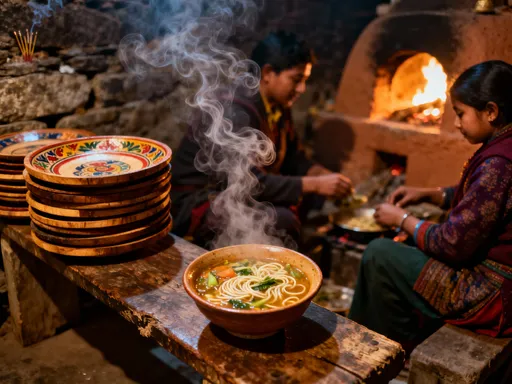
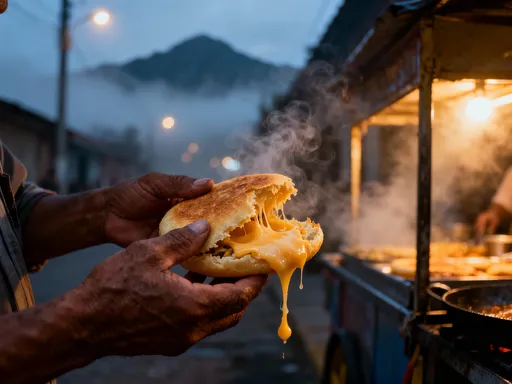
It was on one of these quiet lanes that I first noticed the faint but unmistakable aroma of simmering broth and toasted spices. There was no sign, no painted menu, only a low wooden door slightly ajar, revealing a sliver of warm light and the silhouette of someone stirring a large pot. Curiosity pulled me forward. As I stepped inside, the cool morning air gave way to a cozy warmth, the kind that settles into your bones after a long journey. The space was modest—just a few wooden benches, a clay oven glowing in the corner, and shelves lined with chipped but carefully cleaned brass cups.
What struck me most was the absence of performance. There was no attempt to cater to tourists, no English menu taped to the wall, no forced smiles. Instead, an elderly woman in a faded red sari glanced up, nodded gently, and gestured for me to sit. A young boy brought a small brass kettle and poured tea without asking. This wasn’t a restaurant in the conventional sense; it was a home kitchen open to strangers, a place where food was shared not for profit, but as an act of quiet generosity. In that moment, I realized I had found something rare: a meal rooted not in spectacle, but in tradition and trust.
A Kitchen Steeped in Tradition
The eatery is run by a Newar family that has lived in the Boudhanath area for over five decades. Though they never named the place, neighbors know them simply as “the ones who cook with the old fire.” The kitchen has remained largely unchanged since the 1970s—no gas stoves, no electric mixers, just a traditional *chulo*, a clay oven fueled by dried wood and yak dung, which imparts a subtle smokiness to every dish. The family rises before sunrise to prepare the day’s meals, grinding spices by hand and kneading dough on a wooden board worn smooth by years of use.
Every element of the space tells a story. The wooden benches are hand-carved, their surfaces marked with the faint grooves of countless meals. The plates are mismatched—some hand-painted with floral patterns, others simple earthenware—but all are washed with care after each use. Even the water comes from a nearby stone spout, a traditional *dhungadhara*, that has supplied the neighborhood for generations. This is not a curated “rustic charm” designed for Instagram; it is a way of life preserved through quiet dedication.
The recipes themselves are heirlooms, passed from grandmother to mother to daughter. Ingredients are sourced with intention: wild herbs gathered from the foothills of the Himalayas, organic lentils from local farmers, and dairy from yaks raised in the highlands. There is no written menu—dishes change with the season and what is available. In winter, hearty stews simmer for hours; in spring, lighter vegetable curries take center stage. The family does not advertise, nor do they accept reservations. They cook what they can, serve whom they can, and close when the food runs out. This simplicity is not a limitation; it is a philosophy.
The Meal That Feels Like Home
When the first bowl arrived, it was unassuming—a deep ceramic dish filled with steaming *thukpa*, a Tibetan-Nepali noodle soup rich with hand-pulled wheat noodles, tender pieces of yak meat, and a broth that had simmered for over eight hours. The aroma alone was transporting: a blend of garlic, ginger, and a hint of *timur*, the Nepali version of Sichuan pepper that leaves a gentle tingle on the tongue. I took the first spoonful slowly, and within seconds, warmth spread through my chest. The broth was deeply savory, with layers of umami from dried mushrooms and aged cheese, yet perfectly balanced—never heavy, never greasy.
Next came *sel roti*, a traditional rice doughnut fried to golden perfection. Unlike the sweet versions found in tourist markets, this one was slightly savory, made with a touch of cardamom and fermented rice batter that gave it a subtle tang. It was served warm, straight from the oil, and paired beautifully with a small bowl of homemade yogurt made from yak milk—thick, creamy, and slightly sour in the best possible way. Finally, a small brass cup of butter tea arrived, its surface shimmering with a thin layer of melted yak butter. The first sip was bold, almost medicinal, but with repeated sips, its richness became comforting, like a warm blanket on a cold morning.
What made the meal unforgettable wasn’t just the taste—it was the silence that followed each bite. There were no distractions, no phones, no need to comment or photograph. The flavors spoke for themselves. I watched as a group of local monks sat across from me, eating with quiet focus, their hands moving with practiced ease. One of them smiled when he saw me savoring the *thukpa*, and simply said, “*Yestai cha, asli khana*”—this is how real food should be. In that moment, I understood: this was not a performance for visitors. It was a daily ritual, a continuation of a culinary lineage that few outsiders ever witness.
Why This Hidden Spot Matters
In an age of globalized food culture, where “fusion” often means dilution and authenticity is sacrificed for convenience, places like this family kitchen are more important than ever. They are guardians of culinary heritage, preserving recipes and techniques that cannot be replicated in a commercial kitchen. While many restaurants in Kathmandu now offer “Nepali cuisine” with fusion twists—kimchi momos, truffle-infused dal bhat, or deconstructed thukpa—this eatery remains untouched by trend. Its food is not designed to impress; it is designed to nourish.
There is a growing risk that such traditions will fade. As tourism expands, so does the pressure to conform—to simplify menus, to speed up service, to cater to foreign palates. Some family-run kitchens have already closed, unable to compete with flashy cafes that promise “authentic Nepali vibes” but serve pre-made sauces and frozen dumplings. The loss is not just culinary; it is cultural. When we lose these kitchens, we lose stories, memories, and the quiet wisdom of generations who cooked not for fame, but for family.
Supporting these hidden eateries is not just about eating well—it is an act of cultural preservation. Every bowl of handmade thukpa, every cup of butter tea served in a brass cup, is a vote for slow food, for human connection, for dignity in labor. Travelers have a role to play: by seeking out these places, by respecting their rhythms, and by choosing depth over convenience, we help ensure that such traditions do not vanish. This is not charity; it is reciprocity. We receive nourishment; they receive recognition. It is a quiet exchange, but one that matters deeply.
How to Find (and Respect) the Hidden Eateries
Finding such places requires more than a map—it requires presence. The first step is to slow down. Instead of rushing from one landmark to the next, allow time to wander without destination. Walk the side streets, observe where locals gather for meals, and follow the scent of cooking. Often, the best food is where you least expect it: behind a curtain in a courtyard, in a back room of a tea shop, or up a narrow staircase with no signage. A simple smile and a polite nod can open doors more effectively than any guidebook.
Learning a few basic Nepali phrases can also go a long way. Asking “*Khaba?*” (Shall we eat?) or “*Kasto khana cha?*” (What kind of food do you have?) shows respect and interest. Even if your pronunciation is imperfect, the effort is appreciated. When invited in, remember that this is not a transactional space. Remove your shoes if asked, accept tea even if you’re not thirsty, and never insist on taking photos. These kitchens are not exhibits; they are homes. If you do wish to capture a moment, ask first—always.
When you do visit, eat mindfully. Savor each bite. Stay for more than one dish if possible. And when you leave, thank the family not just with words, but with kindness—perhaps by returning another day or recommending the place to a fellow traveler who values authenticity over spectacle. Most importantly, resist the urge to treat the experience as “quaint” or “exotic.” This is not a performance for your entertainment. It is someone’s daily life, their labor, their love. To honor it is to treat it with the dignity it deserves.
Beyond the Plate: A Deeper Connection
The meal at that hidden kitchen did more than fill my stomach—it opened a door to connection. As I sat on the wooden bench, struggling to eat *sel roti* without crumbling it, the young boy who served tea laughed kindly and showed me how to tear it gently with my fingers. We didn’t share a language, but we shared a moment of understanding. Later, when I spilled a bit of broth, the old woman simply handed me a cloth and smiled, as if to say, “No harm done. Eat, be warm.”
These small exchanges—laughing over a mess, sharing food in silence, accepting kindness without expectation—are the heart of travel at its best. They remind us that beneath all our differences, we share the same needs: to be seen, to be fed, to belong. The spirit of Boudhanath—mindfulness, compassion, gratitude—was not just in the stupa’s golden eyes, but in that humble kitchen, where food became a language of its own.
Traveling is not just about seeing new places; it is about being changed by them. And sometimes, the most profound changes come not from grand monuments, but from quiet moments in unmarked doorways. If you go to Boudhanath, walk the kora, light a butter lamp, spin a prayer wheel. But then, take one more step. Turn down a side lane. Follow your nose. Let curiosity lead you not to the expected, but to the unseen. Because beyond the plate, beyond the meal, there is something deeper: a reminder that the world is still full of quiet wonders, waiting only for those who are willing to look.