You Won’t Believe These Secret Viewpoints in Dijon
Dijon, France, is more than mustard and medieval streets — it’s a city of hidden heights and quiet lookouts that most travelers miss. I stumbled upon viewpoints where the rooftops stretch like aged parchment under golden light, and the Jura Mountains whisper in the distance. These spots aren’t crowded, but they’re absolutely stunning. If you’re chasing authentic moments with breathtaking backdrops, Dijon’s best vistas will rewrite your travel diary. With its gently rolling terrain and centuries-old architecture, the city offers subtle yet powerful perspectives that reward curiosity and a willingness to wander just a little off the main paths. This is not a place of dramatic cliffs or towering peaks, but of quiet ascents and unexpected clearings — moments when the city opens up and reveals itself in layers.
Why Dijon Deserves a Second Look
Dijon is often passed through quickly, a stopover between the grandeur of Paris and the sun-drenched villages of Provence. Yet those who linger discover a city with a rhythm all its own — one shaped as much by elevation as by history. Unlike many French cities built on flat plains, Dijon rests on a series of soft hills and gentle slopes, creating natural vantage points that are easy to overlook but impossible to forget once seen. The historic core rises and falls in subtle waves, allowing rooftops to align in unexpected ways and offering glimpses of distant vineyards framed between ancient stone facades.
These shifts in elevation are not dramatic, but they are meaningful. A few steps uphill can transform a narrow alley into a panoramic corridor, where the city unfolds in a patchwork of terracotta tiles, slate spires, and sunlit courtyards. What was once just a charming old town becomes a living landscape, layered with depth and light. For travelers who appreciate both history and harmony with the natural terrain, Dijon offers a rare balance — a place where architecture and topography work together to create quiet moments of beauty.
Because these views are not widely advertised, they remain largely untouched by crowds. There are no long queues or ticketed entries for most of them, just the simple reward of being observant and willing to explore. This makes Dijon especially appealing to travelers who value authenticity — those who want to experience a city not just as a checklist of attractions, but as a place with breath, rhythm, and quiet corners meant for reflection. The city’s elevation changes invite you to slow down, look up, and see it from a new angle — literally and figuratively.
The Bell Tower of Notre-Dame de Dijon – A Must-Climb Landmark
One of the most accessible and memorable viewpoints in Dijon begins at the base of the 14th-century bell tower attached to the Église Notre-Dame. Though the church itself is modest in size and tucked into a compact square, its tower stands as a silent observer of centuries, offering one of the few opportunities to rise above the city’s rooftops. The climb is narrow and steep, a spiral of worn stone steps winding upward with just enough space for one person at a time. It is not for the claustrophobic or those with mobility concerns, but for others, it is a pilgrimage worth every step.
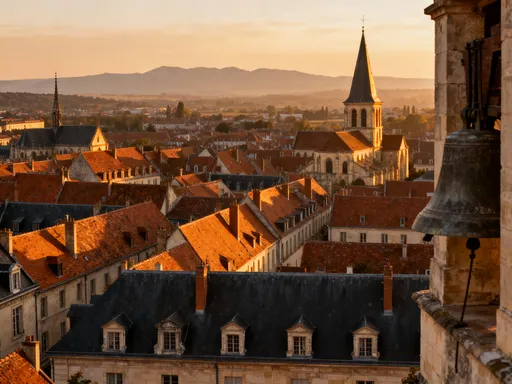
At the top, the view opens in a full 360-degree panorama. To the east, the Palais des Ducs rises like a fortress of history, its rooftops and turrets forming a jagged skyline. To the west, the city softens into residential neighborhoods where laundry flutters on balconies and cats stretch across sun-warmed tiles. North and south, the patchwork of Dijon’s historic districts spreads out in geometric harmony, a tapestry of red and gray that glows differently with each shift of light. On clear days, the distant outline of the Jura Mountains appears on the horizon, a hazy reminder of the natural world beyond the city’s stone embrace.
What makes this experience truly special is not just the view, but the sounds that accompany it. The famous Jacquemart clock, which sits just below the viewing platform, chimes the hour with mechanical precision. Two small figures emerge from a carved alcove to strike the bells — a tradition that has played out for centuries. Standing above the city as the chimes echo across the rooftops, one feels a deep connection to time, to place, and to the quiet continuity of daily life in Dijon. It is a moment of stillness in motion, a pause that feels both personal and timeless.
Rooftop Views from the Palais des Ducs and Musée des Beaux-Arts
The Palais des Ducs dominates Dijon’s skyline, a sprawling complex that once housed the powerful Dukes of Burgundy. While much of the palace is now home to government offices and the Musée des Beaux-Arts, its architectural grandeur remains unmistakable. Public access to the rooftops is limited, but the upper floors of the museum offer one of the most refined ways to experience the city from above. As you ascend through galleries filled with Renaissance paintings and ancient sculptures, you’ll begin to notice large windows strategically placed to frame views of the city beyond.
From the museum’s northern corridors, you can look out over rooftops that slope gently toward the Parc de la Colombière. The view is not unobstructed, nor is it meant to be — it is curated, like a painting within a painting. Church spires rise in the distance, their silhouettes softened by morning mist or sharpened by afternoon light. On clear days, the green dome of the Basilique Sainte-Anne appears on the horizon, a quiet landmark set apart from the denser urban fabric. These framed perspectives encourage a slower way of seeing, one that invites contemplation rather than just capture.
What makes this vantage point unique is its atmosphere. Unlike outdoor lookouts, this is a space of quiet reverence, where the act of looking out becomes part of a larger cultural experience. The museum itself tells the story of Burgundy’s artistic legacy, and from these windows, you see the living continuation of that legacy — a city that still honors beauty in its architecture, its gardens, and its daily rhythms. It is a reminder that great art is not only found in galleries but also in the way a city grows and glows under the sky.
Hidden High Points in Dijon’s Historic Streets
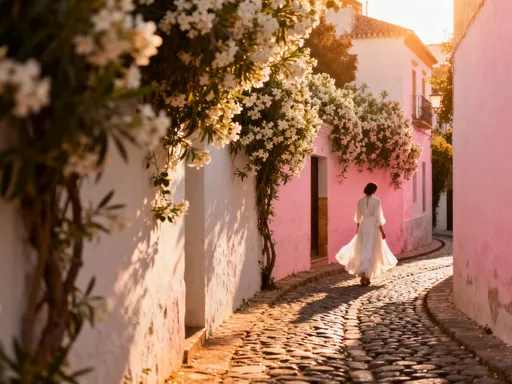
Beyond the major landmarks, Dijon’s true magic lies in its subtle elevation changes — small rises and gentle inclines that create perfect pause points throughout the old town. These are not marked on maps or highlighted in guidebooks, but they are known to locals who take their morning coffee standing at a favorite corner, gazing out over a sudden opening in the rooftops. One such spot is found on Rue Verrerie, where a slight rise allows the street to align perfectly with the distant hills, creating a framed vista that feels almost intentional.
Another quiet high point is near Place Saint-Pierre, where the ground rises just enough to offer a broader view of the surrounding neighborhood. From here, you can see rooftops stepping down like terraces, with church towers rising in the background. It’s the kind of view that invites you to linger — to sit on a low stone wall, unfold a map, or simply breathe in the morning air. These micro-viewpoints are not about grand panoramas, but about intimacy. They offer a human-scale experience of the city, one that feels personal and unhurried.
Yet another hidden ascent can be found behind Rue des Forges, where an elevated walkway runs alongside a historic building. This path is rarely crowded, often used only by residents heading to work or school. But for the observant traveler, it offers a rare alignment — a straight shot down a narrow street where rooftops recede into the distance like waves, and the sky opens up just enough to let in a wash of golden light. These moments are fleeting, dependent on time of day and weather, but they are precisely what make Dijon so rewarding for slow travel.
The Basilique Sainte-Anne and Its Quiet Panorama
Just beyond the densest part of the old city, the Basilique Sainte-Anne occupies a gentle hill that gives it a quiet prominence. Unlike the Palais des Ducs or Notre-Dame, this church does not draw large crowds, making it a sanctuary not just for worship but for peaceful observation. The area around it feels calmer, with tree-lined streets and residential buildings that blend seamlessly into the landscape. From the front steps of the basilica, you look down over a neighborhood where daily life unfolds at a gentle pace — children walk to school, neighbors greet each other from balconies, and laundry sways in the breeze.
The view from here is not about sweeping mountain ranges or glittering skylines. Instead, it is a portrait of ordinary beauty — the kind found in sunlit stone, climbing ivy, and the soft hum of city life. To the east, the green expanse of Parc des Sources in Chenôve stretches into the distance, a ribbon of nature woven into the urban fabric. On quiet mornings, mist rises from the trees, blurring the line between city and countryside. It is a view that feels lived-in, authentic, and deeply comforting.
Because this site is less frequented by tourists, it offers a rare sense of solitude. You can stand on the steps for several minutes without seeing another visitor, allowing for a moment of reflection that is hard to find in more popular spots. The basilica itself, with its neoclassical façade and tall columns, adds a sense of calm dignity to the scene. This is not a place to rush through, but to return to — perhaps in the early evening, when the light turns golden and the city begins to glow from within.
Sunset from Parc de la Colombière – Nature and City in One Frame
On the western edge of Dijon, the Parc de la Colombière offers one of the most expansive and serene viewpoints in the city. This large public park combines wooded trails, open lawns, and gently rising paths that lead naturally to elevated clearings with wide-angle views. As the sun begins its descent, the path toward the highest point becomes a pilgrimage for those in the know — locals with cameras, couples with picnic baskets, and travelers seeking a quiet moment of beauty.
From the upper terraces of the park, you look back toward the city center, where rooftops and spires are bathed in warm, amber light. The stone buildings glow as if lit from within, and church towers cut sharp silhouettes against the evening sky. The contrast between nature and city is striking — the lush greenery of the park frames a skyline shaped by centuries of human hands. It is a view that captures Dijon’s essence: a place where history and harmony coexist.
What makes this experience especially memorable is the ease with which it unfolds. There is no climb that feels arduous, no admission fee, no schedule to follow. You simply follow the winding paths, let the elevation rise gradually, and allow the view to reveal itself. Benches are thoughtfully placed along the route, inviting you to sit, breathe, and watch as the city transitions from day to night. When the first lights flicker on in apartment windows, the effect is both romantic and grounding — a reminder that behind every beautiful skyline is a community coming home.
Practical Tips for Chasing the Best Views in Dijon
To fully enjoy Dijon’s hidden viewpoints, preparation is key. Comfortable walking shoes are essential — the city’s charm lies in its cobbled lanes, uneven stones, and subtle inclines. Many of the best perspectives are found not through grand entrances but by wandering quietly through side streets and paying attention to changes in elevation. A light jacket is also advisable, especially in the evenings when the air cools quickly, even in summer.
Timing can make a significant difference. Early morning visits to the Notre-Dame bell tower or the Palais des Ducs museum offer softer light and fewer people, allowing for a more intimate experience. Sunrise over the rooftops casts long shadows and golden highlights, ideal for photography or quiet reflection. Late afternoon is perfect for Parc de la Colombière, where the setting sun enhances the city’s warm stone tones. Weekdays are generally less crowded than weekends, particularly at popular sites.
For indoor viewpoints like those in the Musée des Beaux-Arts, it’s important to check opening hours in advance. The museum is closed on Tuesdays, and special exhibitions may affect access to certain galleries. While entry to the museum is not free, the experience of viewing the city from its upper floors is included in the ticket price, making it a worthwhile investment. Similarly, climbing the Notre-Dame tower may require a small fee and is subject to seasonal availability, so confirming details at the tourist office or official website is recommended.
Finally, don’t rely solely on digital maps. Some of the most beautiful moments in Dijon come from turning down an unexpected alley, following a narrow staircase uphill, or simply looking up when the light hits the rooftops just right. Let curiosity guide you. The city rewards those who wander with intention and openness, offering views that feel discovered rather than directed. These are the moments that stay with you — not because they were planned, but because they felt true.
Conclusion: Elevate Your Experience, Not Just Your Camera
Dijon’s magic is not confined to its famous mustard or its well-preserved medieval streets. It lives in the quiet moments when you rise above the ordinary and see the city breathe. These hidden viewpoints — whether from a centuries-old bell tower, a museum window, or a residential hillside — offer more than just beautiful photos. They offer presence. They invite you to slow down, to notice the way light moves across stone, how rooftops align like puzzle pieces, and how daily life unfolds beneath your gaze.
By seeking out these elevated perspectives, you do more than visit Dijon — you truly see it. You understand its rhythms, its layers, and its quiet dignity. You connect with a city that rewards patience and curiosity, where the best views are often the ones no one told you about. In a world of crowded landmarks and rushed itineraries, Dijon reminds us that travel is not just about where we go, but how we see. So wear comfortable shoes, follow the subtle rise of the land, and let the city reveal itself, one quiet height at a time.