You Won’t Believe These Hidden Viewpoints of Neuschwanstein
Have you ever seen a castle so magical it looks like it jumped out of a fairy tale? That’s exactly what Neuschwanstein feels like. I went not knowing what to expect, but was blown away by the breathtaking views from every angle. Beyond the postcard spots, I discovered quiet trails and secret vantage points few tourists see. This isn’t just a castle visit—it’s a journey through misty hills, forest clearings, and moments of pure awe. Let me show you the real magic of Neuschwanstein.
First Glimpse: The Magic Begins at Marienbrücke
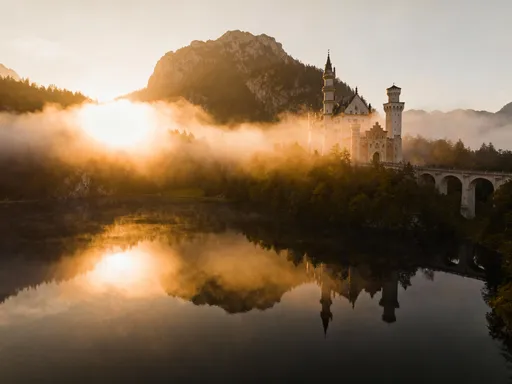
The journey to Neuschwanstein Castle often begins at Marienbrücke, the iconic wooden bridge suspended high above the Pöllat Gorge. From this vantage point, the full majesty of the castle unfolds—its turrets piercing the morning mist, its pale stone glowing in the soft light of dawn. This is the view replicated on countless postcards, mugs, and travel brochures, and for good reason. The panorama captures the essence of King Ludwig II’s romantic vision: a fortress of dreams perched above a wild and untamed landscape.
Yet, while Marienbrücke is undeniably stunning, it is also one of the most crowded spots in the region. Tour buses arrive early, and by mid-morning, the bridge can feel more like a transit hub than a place of wonder. The key to experiencing its true magic lies in timing. Arriving at sunrise transforms the scene entirely. The air is crisp, the light golden and gentle, and the mist rising from Alp Lake below wraps the valley in a soft, dreamlike haze. In these quiet moments, the castle feels less like a tourist attraction and more like a living fairytale.
What many visitors don’t realize is that Marienbrücke is not the destination—it’s the invitation. The bridge offers the first chapter in a much richer story, one that unfolds as you step off the main path and into the surrounding forest. While most turn back after snapping a few photos, those who continue walking begin to discover a different side of Neuschwanstein—one defined by solitude, natural beauty, and unexpected perspectives. The real journey starts when the crowds thin and the trail climbs higher into the hills.
Beyond the Crowd: Hiking Trails with Stunning Perspectives
Just a short walk from Marienbrücke, the forest begins to whisper its secrets. The well-marked but less-traveled paths that branch off from the main tourist route lead to hidden clearings, quiet overlooks, and views that feel like private revelations. One of the most rewarding routes is the Hinterhundskuhle Trail, a gently ascending path that winds through dense pine woods fragrant with resin and damp earth. As you climb, the sounds of chatter and camera shutters fade, replaced by birdsong and the rustle of leaves underfoot.
This trail opens up to a series of breathtaking vantage points where the castle appears framed by wildflowers in summer or golden foliage in autumn. Unlike the frontal view from Marienbrücke, these angles reveal the castle’s relationship with the land—how it emerges from the rock, how its towers echo the peaks behind it, and how it seems to grow organically from the mountainside. Photographers especially appreciate these off-center compositions, which offer a more dynamic and intimate portrayal of the structure.
What makes these trails so special is not just the scenery, but the sense of discovery they inspire. Families, solo travelers, and couples alike find a rare peace here, away from the organized tours and guided commentary. With sturdy walking shoes and a basic map—or a downloaded trail guide on a smartphone—visitors can explore at their own pace. There’s no rush, no schedule, just the freedom to pause, breathe, and absorb the landscape. These trails are proof that sometimes, the most memorable experiences are found just a few minutes off the beaten path.
Alpsee Lake: A Mirror Reflecting Fairytale Beauty
To the south of Neuschwanstein Castle lies Alpsee Lake, a tranquil body of water that offers one of the most serene and photogenic views of the fortress. On calm mornings, when the surface of the lake is perfectly still, the castle’s reflection appears as if painted onto the water. The image is so crisp and symmetrical that it feels almost unreal—a mirror world where stone and sky merge into one. This is the kind of scene that lingers in memory long after the trip ends.
A leisurely walk around Alpsee takes about an hour and is suitable for all ages and fitness levels. The path is well-maintained, with wooden bridges crossing small inlets and benches placed at ideal viewing spots. Along the way, you’ll pass small picnic areas where families gather with baskets of bread, cheese, and fruit, enjoying the quiet beauty of the surroundings. Local children skip stones, while dogs splash at the water’s edge, adding a touch of everyday life to the fairytale setting.
What sets Alpsee apart from the main tourist circuit is its peaceful atmosphere. While the castle grounds buzz with activity, the lake remains a sanctuary of calm. There are no ticket lines, no guided tours, and no timed entries—just open space and natural beauty. Visitors who make the short hike or bike ride from Hohenschwangau village are often surprised by how uncrowded it feels. Whether you come at sunrise, midday, or as the sun dips behind the mountains in the evening, Alpsee offers a moment of stillness that complements the grandeur of the castle itself.
From Afar: The Best Distant Vistas by Bike and Foot
Sometimes, the most powerful views are the ones that come unexpectedly. While close-up perspectives highlight the castle’s intricate architecture, distant vantage points reveal its true relationship with the landscape. One of the best ways to experience this is by bicycle. Renting a bike in Füssen or Hohenschwangau allows you to explore the rolling countryside at your own pace, following quiet country roads that wind through meadows and along forest edges.
As you ride, the castle appears in glimpses—peering through a break in the trees, rising above a field of wildflowers, or silhouetted against a stormy sky. These fleeting moments create a sense of discovery, as if the castle is revealing itself only to those who take the time to wander. The Holzgau Path, a lesser-known route that runs along a gentle ridge, offers some of the most dramatic long-range views. From here, the full scale of the Alps becomes part of the composition, with Neuschwanstein appearing as one element in a vast, natural tapestry.
Walking these outer paths also allows you to appreciate the region’s biodiversity. In spring, the hillsides are dotted with crocuses and gentians; in summer, the air hums with bees and butterflies. The scent of pine and wild thyme fills the air, and the distant call of cowbells echoes from alpine pastures. These sensory details enrich the experience, turning a simple sightseeing trip into a deeper connection with place. For travelers seeking more than just a checklist of landmarks, these distant vistas offer a slower, more thoughtful way to engage with the landscape.
Elevated Secrets: The Schwangau High Trail Experience
For those willing to trade comfort for reward, the Schwangau Höhenweg—known locally as the High Trail—delivers one of the most unforgettable experiences in the region. This moderately challenging hike begins near the village of Schwangau and climbs steadily through mixed forest before emerging onto an open ridge with panoramic views. The trail is well-marked but sees far fewer visitors than the main castle paths, making it a favorite among locals and seasoned hikers.
From the ridge, the vista stretches for miles: to the north, the rolling foothills of Bavaria; to the south, the jagged peaks of the Austrian Alps, often capped with snow even in late spring. Neuschwanstein itself appears from a new perspective—no longer the dominant foreground, but part of a grander geological and historical narrative. On clear days, the view includes Hohenschwangau Castle in the valley below, allowing visitors to see both royal residences in a single frame.
What makes this trail particularly special is its sense of elevation—not just physical, but emotional. As you walk along the ridge, the air feels crisper, the light brighter, and the world below seems to slow. There are no crowds, no announcements, no time limits. Just the rhythm of your footsteps and the vastness of the landscape. It’s on trails like this that travel transforms from observation to immersion. The Schwangau High Trail doesn’t just show you the castle—it helps you understand why King Ludwig chose this place to build his dream.
Practical Tips: How to Maximize Your Viewpoint Adventure
Exploring the hidden viewpoints of Neuschwanstein requires a bit of planning, but the rewards are well worth the effort. The first and most important tip is to arrive early. The parking lots in Hohenschwangau begin to fill by 8:30 a.m., and the shuttle buses from Füssen get crowded quickly. An early start not only helps you avoid the worst of the crowds but also increases your chances of catching the castle in soft morning light, when mist still clings to the valley floor.
While the shuttle bus is a convenient option, consider walking from Hohenschwangau village to the base of the castle. The 20-minute walk follows a tree-lined road with occasional views of the fortress through the branches, setting a reflective tone for the day. Wear comfortable, sturdy footwear—many of the best viewpoints require short hikes over uneven terrain. Layers are essential, as mountain weather can change quickly; a light rain jacket and a warm sweater can make a big difference even in summer.
A detailed map or an offline GPS app is highly recommended, especially if you plan to explore beyond Marienbrücke. While signage in the area is generally good, some trails are not marked on standard tourist maps. Downloading a hiking app like Komoot or AllTrails before your trip ensures you won’t get lost. Finally, remember that visiting the interior of Neuschwanstein Castle requires a timed-entry ticket booked weeks in advance through the official website. However, all the viewpoints described in this guide are accessible without a ticket, making them ideal for independent travelers or those who prefer to experience the castle from the outside.
Why These Views Matter: More Than Just Photos
The most photographed spots at Neuschwanstein are undeniably beautiful, but they represent only a fraction of what the place has to offer. The hidden viewpoints—whether seen from a quiet trail, a still lake, or a distant ridge—invite a deeper kind of engagement. They encourage us to slow down, to look closely, and to consider not just what we are seeing, but why it moves us.
Each angle tells a different story. From Marienbrücke, we see the castle as a symbol of romantic idealism. From Alpsee, we see it as a reflection of nature’s harmony. From the Schwangau High Trail, we see it as part of a living landscape shaped by time and geology. These perspectives remind us that beauty is not a single image, but a collection of moments, light, and emotion.
More than that, these viewpoints connect us to the human desire to create meaning. King Ludwig II built Neuschwanstein not as a military stronghold, but as a personal sanctuary—a place where art, nature, and imagination could coexist. By stepping off the main path, travelers honor that spirit of creativity and introspection. They don’t just visit a castle; they participate in a legacy of wonder.
In a world where travel can sometimes feel rushed or transactional, these quiet moments of discovery are precious. They remind us that the best journeys are not always the most advertised, but the ones we find for ourselves. The magic of Neuschwanstein is not confined to its walls or turrets—it lives in the mist, the light, the silence between footsteps. And for those willing to look beyond the obvious, it is waiting to be found.