This Is What Happens When You Stand on the Edge of the Grand Canyon
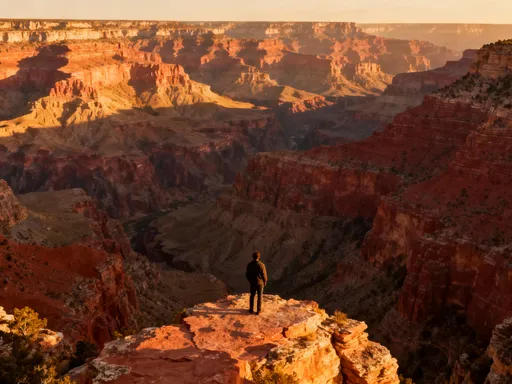
Standing at the rim of the Grand Canyon, I felt like the world had paused. The vastness stretched beyond what my eyes could grasp—layered red rocks, deep shadows, and endless sky. It wasn’t just a view; it was a feeling, raw and humbling. You don’t just see this natural wonder—you experience it in your bones. The air is still, the horizon blurs, and for a moment, life’s constant noise fades into silence. This is why millions make the journey, chasing something bigger than themselves. The Grand Canyon does not simply impress; it transforms. It reminds us of time’s depth, nature’s power, and our own quiet place within it. Few places on Earth offer such a profound encounter with the ancient and the infinite.
First Glimpse: The Moment the Canyon Takes Your Breath Away
For most visitors, the first sight of the Grand Canyon is nothing short of a revelation. Whether arriving at Mather Point on the South Rim or stepping onto the quieter Yaki Point trailhead, the moment the chasm comes into view, time seems to slow. There is no photograph, no video, that can truly prepare someone for the sheer scale. The canyon stretches 277 miles long, up to 18 miles wide, and plunges over a mile deep. The human eye struggles to process such dimensions. What registers first is not measurement but emotion—awe, wonder, and a quiet reverence that settles deep in the chest.
The play of light enhances this emotional impact. At sunrise, the canyon walls ignite in hues of amber, rose, and gold as the sun climbs above the eastern rim. Shadows retreat slowly, revealing new layers of rock that seem to emerge from darkness like secrets being unveiled. By midday, the light sharpens, casting crisp contrasts between sunlit ridges and deep ravines. But it is at sunset that the canyon truly becomes theatrical. The western sky burns orange and purple, and the rock faces absorb the glow, turning the entire landscape into a living painting. Visitors often stand in silence, cameras lowered, simply absorbing the moment.
What is equally striking is the shared experience among strangers. People from different countries, generations, and walks of life stand shoulder to shoulder, united by the same hushed amazement. Children point in wide-eyed wonder, couples hold hands, and solo travelers sit quietly on stone benches, journaling or simply staring into the void. There is a collective recognition: this is not just a scenic overlook. It is a threshold into something ancient and greater than oneself. The air is often still, broken only by the distant cry of a raven or the whisper of wind through juniper trees. In these moments, the Grand Canyon does not merely impress—it recalibrates the soul.
Why the Grand Canyon Stands Apart Among Natural Wonders
While the world boasts many breathtaking natural landmarks—from Niagara Falls to Mount Everest Base Camp—the Grand Canyon occupies a unique category. Its distinction lies not in height or water volume, but in depth, age, and geological storytelling. Carved over millions of years by the relentless flow of the Colorado River, the canyon exposes nearly two billion years of Earth’s history in its rock layers. That is more than 40% of the planet’s existence, visible in striations of red, pink, and gray that stack like the pages of a colossal book.
Compared to other wonders, the Grand Canyon’s scale is difficult to overstate. The Himalayas inspire through vertical dominance; the Amazon through biological abundance. The Grand Canyon, however, inspires through time. It is not just large—it is ancient. Its deepest layers, such as the Vishnu Schist, date back 1.7 billion years, formed under immense heat and pressure long before complex life emerged. Each visible stratum represents a different era, a different environment—shallow seas, desert dunes, volcanic activity—all preserved in stone.
This unparalleled geological record earned the Grand Canyon UNESCO World Heritage status in 1979. It is recognized not only for its visual drama but as a scientific treasure. Geologists from around the world study its exposed layers to understand planetary change, climate shifts, and tectonic movements. Yet, its value extends beyond science. The canyon has long held spiritual significance for Native American tribes, including the Havasupai, Hopi, and Navajo, who consider it a sacred landscape shaped by ancestral forces.
What makes the Grand Canyon truly exceptional is its accessibility to awe. Unlike remote or dangerous natural phenomena, it offers a profound experience to the average visitor. One does not need to climb or dive to feel its impact. A short walk from the parking lot can deliver a view that alters perspective. It is this rare combination—scientific importance, cultural depth, and emotional resonance—that sets the Grand Canyon apart. It is not merely a place to visit. It is a place to understand.
Choosing Your Side: South Rim vs. North Rim – Experience Differences
One of the most important decisions for a Grand Canyon visitor is which rim to explore. The South Rim and North Rim, though part of the same geological formation, offer distinctly different experiences. The South Rim is the most visited, welcoming over 4 million people annually. Open year-round, it is easily accessible from Flagstaff or Williams, Arizona, via well-maintained highways. Grand Canyon Village serves as the central hub, offering visitor centers, lodges, restaurants, and shuttle services. Its elevation—around 7,000 feet—means milder temperatures than the canyon floor, though winter snows can occasionally close roads.
The South Rim is ideal for first-time visitors seeking convenience and iconic views. Mather Point, Yavapai Observation Station, and Hopi Point deliver panoramic vistas with minimal walking required. The Rim Trail, largely paved and flat, allows for easy strolling between viewpoints. Ranger programs, museum exhibits, and guided talks are regularly scheduled, making it an excellent choice for families and those interested in education. However, its popularity means crowds, especially during peak seasons from May to October. Parking can be challenging, and viewpoints may feel congested at sunrise and sunset.
In contrast, the North Rim, located about 215 miles away by road, offers solitude and a wilder atmosphere. Sitting at 8,000 feet, it is forested with aspen and spruce, creating a cooler, more alpine environment. It is only open from mid-May to mid-October due to heavy snowfall, which naturally limits visitation. Fewer than 10% of park visitors make it to this side, resulting in quieter trails and unobstructed views. Bright Angel Point, the main overlook, feels intimate and reflective, often shared with only a handful of others.
Traveling to the North Rim requires more planning. The drive from the South Rim takes at least five hours, looping through Utah. Roads are narrower and more winding, demanding cautious driving. Lodging options are limited, with only one in-park lodge and a small campground. But for those seeking peace, deeper immersion, and a sense of discovery, the North Rim delivers. It is not easier, but it is different—quieter, cooler, and more contemplative. Choosing between the rims is not about which is better, but which aligns with your travel goals: accessibility and variety on the South, or solitude and serenity on the North.
Beyond the Viewpoints: Active Ways to Connect With the Landscape
While viewing the Grand Canyon from the rim is powerful, stepping onto its trails transforms observation into connection. Movement allows the mind and body to engage with the landscape in a more intimate way. Hiking, even a short distance, shifts the experience from passive sightseeing to active participation. The Rim Trail, stretching over 13 miles along the South Rim, is ideal for casual walkers. Much of it is paved, wheelchair-accessible, and connects major viewpoints. Walking just a few miles offers changing perspectives—angles, light, and depth shift with every turn, revealing new details in the rock formations.
For those seeking a deeper descent, trails like Bright Angel and South Kaibab provide access to the inner canyon. Bright Angel, maintained by the National Park Service, is the most popular corridor trail. At 9.5 miles round-trip to Plateau Point, it offers drinking water, rest houses, and clear signage. It descends gradually, following ancient fault lines and passing through distinct rock layers. Hikers witness the transition from forested rim to desert-like depths, where temperature rises significantly. The trail’s engineering—benches, switchbacks, and shaded shelters—reflects decades of thoughtful design to balance access with safety.
South Kaibab, though shorter and steeper, offers unparalleled views with no water available, making it better suited for day hikes with proper preparation. Both trails require careful planning: sturdy footwear, sun protection, and ample water are essential. The National Park Service recommends carrying one gallon of water per person per day, especially in summer months when temperatures on the canyon floor can exceed 100°F (38°C). Hikers are advised to descend with care and hike back up slowly, as elevation gain is physically demanding.
Beyond hiking, ranger-led programs deepen understanding. Daily geology walks, cultural talks, and night sky viewings connect visitors to the canyon’s scientific and human stories. Mule rides, operated by Xanterra Parks & Resorts under park oversight, offer a historic way to descend into the canyon. These trips, requiring advance reservations, follow the same trails used by early park explorers and provide a unique, rhythmic pace that encourages reflection. Whether on foot, with a ranger, or on horseback, active engagement fosters a lasting bond with the land—turning a visit into a journey.
Hidden Layers: Understanding the Canyon’s Geological Story
The Grand Canyon is often described as a window into Earth’s past, and for good reason. Its exposed rock layers serve as a timeline, recording eons of planetary change. To understand the canyon is to read this stone chronicle. The process began around 6 million years ago when the Colorado River, fed by melting snow from the Rocky Mountains, began cutting through the Colorado Plateau. But the rocks it carved are far older—some dating back nearly 2 billion years. This means the river did not create the rock; it revealed it, like a sculptor uncovering a form hidden within marble.
Imagine the canyon walls as a layered cake, with each tier representing a different geological period. The top layers, such as the Kaibab Limestone, are about 270 million years old and were formed when the region was covered by a shallow sea. Fossils of marine creatures like brachiopods and crinoids can still be found here. Below that lies the Coconino Sandstone, a striking white layer formed from ancient desert dunes. Its cross-bedding patterns—diagonal lines within the rock—show the direction of prehistoric winds.
Going deeper, the Hermit Shale appears as a slope-forming, reddish layer, indicating a time of swampy lowlands. Further down, the Redwall Limestone—massive and cliff-forming—was deposited in a warm sea teeming with life. Its name comes from the iron oxide that stains its face, not its actual color, which is more gray than red. At the bottom, near the river, lie the oldest rocks: the Vishnu Schist and Zoroaster Granite, twisted and folded by tectonic forces over a billion years ago. These form the canyon’s basement, a foundation built in fire and pressure.
This vertical journey through time is what makes the Grand Canyon so extraordinary. A single hike down Bright Angel Trail takes you through more of Earth’s history than any other place on the continent. Geologists use terms like “great unconformity” to describe gaps in the record—missing layers that suggest long periods of erosion or non-deposition. These absences are as telling as the rocks themselves, hinting at vanished landscapes and lost eras. For the casual visitor, this story can be simplified: the canyon is not just a hole in the ground. It is a library of time, written in stone, where every layer whispers a chapter of the planet’s long, evolving narrative.
Respecting the Wild: Safety, Sustainability, and Responsible Tourism
The Grand Canyon’s beauty is matched only by its power, and with that comes responsibility. Each year, the National Park Service responds to hundreds of search and rescue operations, many due to preventable causes. Heat exhaustion, dehydration, and underestimating trail difficulty are common factors. The canyon’s rim may feel cool, but temperatures at the bottom can be 20 to 30 degrees hotter. Hikers who descend quickly often struggle to climb back, leading to fatigue, disorientation, and medical emergencies. Park officials emphasize a simple rule: hike smart, prepare fully, and turn back when necessary.
Hydration is critical. The dry desert air accelerates fluid loss, and many visitors fail to drink enough water until symptoms appear. The park recommends carrying at least one gallon per person per day and drinking regularly, even when not thirsty. Electrolyte supplements can help maintain balance, especially during long hikes. Sun protection—wide-brimmed hats, sunscreen, and UV-blocking clothing—is equally important. Trails offer little shade, and exposure can lead to sunburn or heatstroke within hours.
Beyond personal safety, environmental protection is essential. The Grand Canyon is a fragile ecosystem, home to species like the endangered California condor, bighorn sheep, and Kaibab squirrel, found nowhere else on Earth. Human impact—litter, off-trail hiking, and wildlife feeding—threatens this balance. The Leave No Trace principles guide responsible behavior: pack out all trash, stay on designated paths, avoid disturbing plants and animals, and respect quiet zones.
The park also manages visitor impact through sustainable practices. Shuttle buses reduce traffic and emissions on the South Rim. Designated campgrounds and backcountry permits help control wilderness use. Educational programs teach visitors about the importance of preservation. Every choice—where to walk, what to take, how to behave—ripples through the landscape. To stand at the rim is to witness majesty; to protect it is to honor it. Responsible tourism ensures that future generations will also feel the canyon’s breath-stealing wonder.
The Lasting Impact: How the Canyon Changes You
The true measure of the Grand Canyon is not in miles or meters, but in memory. Long after the photos are shared and the souvenirs packed away, something lingers—a quiet shift in perspective. Many visitors describe a sense of smallness, not as diminishment, but as liberation. In the face of such ancient, enduring beauty, daily worries lose their weight. The canyon does not care about deadlines, bills, or social media. It simply is. And in its presence, people often find space to breathe, to reflect, to remember what matters.
This emotional afterglow is more than nostalgia. It is a recalibration of values. Time spent at the rim fosters appreciation for natural preservation, for silence, for the slow work of geology and grace. Parents report deeper conversations with their children. Couples reconnect without distractions. Solo travelers find clarity. The canyon becomes a mirror, reflecting not just rock and sky, but inner landscapes—hopes, fears, and the quiet voice of purpose.
For many, the experience inspires a commitment to conservation. Seeing the delicate balance of life in the canyon—the way a single stream supports an oasis, how a condor soars on thermal currents—awakens a sense of stewardship. Visitors leave not just with memories, but with motivation: to reduce waste, support environmental causes, and advocate for protected lands. The Grand Canyon does not ask for admiration alone. It invites responsibility.
And perhaps that is its greatest gift. It reminds us that wonder is not passive. It is an invitation—to learn, to protect, to return with deeper eyes. The canyon will still be there, carving time into stone, long after we are gone. But our role is not to merely witness. It is to honor, to preserve, and to carry its silence within us. When you stand on the edge of the Grand Canyon, you do not just see the world. You begin to understand your place within it.