What If Your Commute Could Build Community—Not Just Waste Time?
Imagine turning your daily commute from a mind-numbing chore into a meaningful part of your day. Instead of staring at the window or scrolling aimlessly, what if you could connect with neighbors, share local tips, or support small businesses—all without adding time to your routine? This isn’t science fiction. With the right app, your morning ride can become a quiet act of belonging, blending seamlessly into the rhythm of your life. You’re not just getting from point A to point B—you’re weaving yourself into the fabric of your neighborhood, one tap at a time. And the best part? It feels natural, not forced, like finally remembering to wave back at the woman with the friendly dog you pass every Tuesday.
The Hidden Cost of the Daily Grind
Let’s be honest—most of us don’t love our commute. Whether you’re sitting in traffic, squeezing onto a packed train, or walking the same sidewalk with your eyes down, it often feels like lost time. Hours disappear into the void, and by the time you reach work or come home, you’re already drained. I remember those days too—driving in silence, gripping the wheel while my mind raced ahead to the to-do list waiting at home. The radio played, but I wasn’t really listening. My thoughts were somewhere else, and my body was just going through the motions. It wasn’t just the time that wore me down; it was the loneliness of it all, even when surrounded by people.
What we often don’t talk about is how much this daily grind affects our emotional well-being. That quiet fatigue, the low-level stress of unpredictability—will the train be late again? Will there be another accident on the highway?—it chips away at our peace. And over time, those little cuts add up. We stop noticing our surroundings. We stop seeing the people who share our route. The barista who knows your order, the older man who walks his terrier every morning, the school crossing guard who gives a cheerful wave—these familiar faces become background noise. But what if they didn’t have to? What if, instead of zoning out, we could use that time to feel more connected, more rooted, more seen?
Technology doesn’t have to pull us further into isolation. In fact, when used with intention, it can do the opposite. The hours we spend moving through our city don’t have to be empty. They can become moments of quiet connection, small acts of care, or even tiny sparks of joy. The key isn’t doing more—it’s doing differently. And the tools are already in our pockets.
From Isolation to Connection: A New Commute Mindset
Living in a city can feel like being surrounded by people and still feeling alone. I’ve stood on subway platforms shoulder to shoulder with strangers and felt completely invisible. We’ve all done it—eyes down, headphones in, creating an invisible bubble to protect our personal space. It makes sense. We’re busy. We’re tired. We don’t want to be bothered. But over time, that protective bubble can turn into a wall. We stop saying hello. We stop noticing when someone’s having a hard day. We stop feeling like we belong somewhere specific.
But connection doesn’t have to be big or dramatic. It can start with something as simple as knowing that the woman who sells flowers near the bus stop got her son into college. Or that the bakery around the corner is looking for someone to cover a weekend shift. These aren’t just random facts—they’re threads. And when we pull on them, even gently, we start weaving a stronger neighborhood.
This is where the idea of “micro-connections” comes in. Think of them as tiny stitches in the fabric of community. You don’t need to host block parties or join a neighborhood committee (though those are great too). You just need to notice. And now, with the right app, you can share what you notice—like the tree that fell during last night’s storm, or the new mural going up on Elm Street. Someone else might add that the city crew is already on the way. Another person might say they saw a lost cat near the library. These small exchanges don’t take much, but over time, they build trust. They remind us: We’re in this together.
I remember the first time I used a local commute app to report a pothole. I snapped a photo, tagged the location, and hit send—more out of habit than hope. But the next day, I saw a city worker filling it in. A week later, someone commented, “Thanks for flagging that—I almost wiped out there last Tuesday.” That small moment stuck with me. I wasn’t just a passerby anymore. I was someone who helped. And that shift in identity? It’s powerful.
How Commute Apps Are Redefining "Alone Time"
We often think of technology as something that competes for our attention. Notifications buzz, screens glow, and suddenly, an hour has passed. But not all tech is designed to distract. Some of it is built to support—quietly, gently, without fanfare. Commute apps that focus on community are like that. They don’t demand your full attention. You don’t need to scroll endlessly or craft perfect posts. Instead, they work with your rhythm, not against it.
These apps use simple, thoughtful features to make participation easy. For example, location-based alerts let you see what’s happening near your usual route. Walking past the community garden? The app might show a message: “Volunteers needed this Saturday—coffee and muffins provided!” No pressure, just an invitation. Or maybe you’re on the bus and hear a child crying. You open the app and leave a quick voice note: “Kid on the blue stroller near 5th and Maple—lost a red mitten. Mom seemed stressed.” Someone else picks it up, posts a photo, and by the time they reach their stop, the mitten’s been found.
The technology behind these apps isn’t flashy. There are no complex dashboards or confusing menus. It’s designed to be intuitive—like a helpful neighbor who knows just when to speak up. You can contribute with a single tap: sharing a photo, sending a short message, or just giving a thumbs-up to someone else’s post. Privacy settings let you control what you share and with whom. You don’t have to reveal your name or exact address. You can be part of the conversation without feeling exposed.
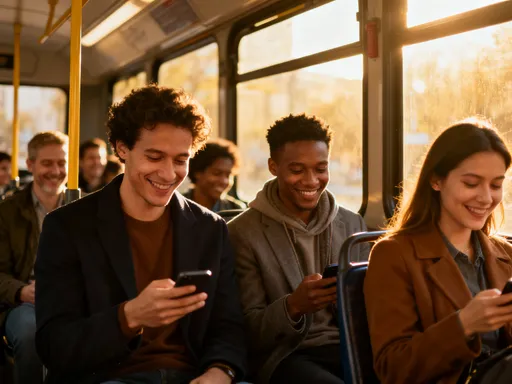
And here’s the thing: these apps don’t ask you to change your routine. You’re already on the bus. You’re already walking the dog. You’re already waiting for the light to change. The app just gives you a way to make those moments count. It turns passive time into active belonging. You’re not just moving through space—you’re helping shape it.
Real Stories: When the Bus Ride Became a Neighborhood Hub
I’ll never forget the story of Maria, a schoolteacher from Portland, who started using a commute app during her bus rides. At first, she just read the updates—local events, weather alerts, the occasional lost dog post. Then one morning, she saw a message: “Kitten stuck in tree near Oak and 12th. Anyone around?” She was just two blocks away. She got off the bus, found the kitten—a tiny orange blur in the branches—and called the number listed. The owner arrived within minutes, tears in her eyes. Maria didn’t think of herself as a hero. She was just in the right place at the right time, with the right information.
But her small act sparked something bigger. Others in the neighborhood started paying closer attention. Someone else began posting daily “walk check-ins” to help seniors feel safer. Another user shared a list of local babysitters, vetted by parents in the app. What began as a way to pass the time turned into a lifeline. People weren’t just sharing updates—they were building trust, one small interaction at a time.
Then there’s James, a retired postal worker in Chicago. Every morning, he walks to the corner store for his coffee. He started using the app to post little observations: “Fresh bread at the market today,” or “Sidewalk icy near the bank—salt needed.” At first, it felt silly. But then people started responding. “Thanks, James—saved me a fall!” one woman wrote. Another said, “You always know where the good deals are!” He began to feel seen in a way he hadn’t since retiring. His daily walk wasn’t just a habit anymore—it was a contribution.
And let’s not forget the community clean-up in Austin. It started with a single post: “Anyone want to pick up trash along the trail this weekend?” The organizer didn’t expect much. But by Friday, over fifty people had signed up. They brought gloves, bags, even a portable speaker for music. The city provided extra bins. What surprised everyone wasn’t just the amount of trash they collected—it was how good it felt to do it together. Parents brought kids. Teens showed up with friends. Retirees chatted over water bottles. That trail had always been a route for commuting. Now, it was a place of pride.
Making It Work for You: Simple Ways to Start
If this all sounds nice but a little intimidating, I get it. Starting something new can feel overwhelming, especially when it involves sharing—even in a small way. But here’s the truth: you don’t have to do anything big. You don’t have to post every day or know everyone in your neighborhood. You just have to begin.
First, pick an app that feels right. Look for one that’s focused on local connection, not advertising or social media clout. Read the reviews. Ask around—maybe a friend already uses one. Once you’ve downloaded it, take a few minutes to set your privacy settings. You can choose to share your general area without revealing your exact address. You can decide whether to use your real name or a friendly nickname. These choices help you feel safe and in control.
Then, just observe. For a few days, read the posts without commenting. Get a feel for the tone of your neighborhood. Is it friendly? Practical? Humorous? Notice what kinds of things people share. You’ll start to see patterns—what matters to them, what they care about.
When you’re ready, make your first contribution. It can be as simple as, “Heads up—slippery patch on the sidewalk near the library,” or “Just saw the first crocus blooming in the park—spring is coming!” No need for perfect grammar or a long story. Just one sentence. One tap. That’s it.
And if no one responds? That’s okay. You’ve still done something meaningful. You’ve added your voice to the mix. Over time, as more people join in, your small posts become part of a larger conversation. The key is consistency, not perfection. Think of it like watering a plant. You don’t see growth right away, but it’s happening beneath the surface.
Beyond Convenience: The Deeper Value of Routine Integration
We often think of self-improvement as something big—joining a gym, learning a language, starting a side hustle. But real change often comes from small, repeated actions. When you use your commute to connect with your neighborhood, you’re not just being helpful. You’re shaping who you are. You’re becoming someone who notices. Someone who cares. Someone who shows up.
These tiny acts build emotional resilience. When you see a problem and take a small step to address it—reporting a broken streetlight, recommending a good plumber, checking in on a neighbor after a storm—you feel capable. You feel like you matter. That sense of agency is powerful, especially on days when life feels out of control. It reminds you: I can make a difference, even in a small way.
And over time, these actions become habits. You start looking forward to your commute. You notice more—the way the light hits the buildings in the morning, the seasonal changes in the trees, the new flower boxes outside the diner. You begin to feel rooted. You’re not just passing through. You’re part of something.
There’s also a quiet joy in being recognized. When the coffee shop owner says, “I saw your post about the parking issue—thanks for letting us know,” it feels good. Not because you want praise, but because you feel seen. You’re not a stranger. You’re a neighbor. And that sense of belonging is one of the most important things we can give ourselves—and each other.
Building a Kinder, Calmer City—One Commute at a Time
When we think about improving our cities, we often imagine big solutions—new policies, massive infrastructure projects, sweeping reforms. But change doesn’t always come from the top. Sometimes, it starts on the bus. On the sidewalk. In the quiet moments between home and work.
Every time you use your commute to share a tip, flag a hazard, or simply say hello to someone in the app, you’re doing more than making your day better. You’re helping build a kinder, calmer city. One where people look out for each other. Where small businesses thrive because neighbors support them. Where lost pets are found, sidewalks are safe, and spring flowers are celebrated.
Technology, at its best, doesn’t replace human connection—it amplifies it. It gives us new ways to care, to contribute, to belong. And the most beautiful part? It fits into the life you already have. You don’t need extra time. You don’t need special skills. You just need your phone, your attention, and a willingness to say, “I’m here. I see you. Let’s do this together.”
So the next time you’re on your way—whether by foot, bike, bus, or car—consider opening that app. Share what you see. Respond to someone else’s post. Let your commute become more than just a journey. Let it become a quiet act of care. Because community isn’t built in grand gestures. It’s built in moments. And yours starts now.