Beyond mood logging: How tracking feelings helped our family connect more deeply
Have you ever felt too busy to really feel—until emotions spill over at the wrong moment? I used to miss my kids’ subtle mood shifts, and my partner and I often ended up stressed without knowing why. Then we started using a simple mood tracking app together. It didn’t just record emotions—it revealed patterns, sparked honest talks, and helped us support each other better. This isn’t about data; it’s about discovering how tech can quietly strengthen family bonds in real life.
The Moment Everything Changed: When Emotions Finally Made Sense
It was a regular Tuesday evening, the kind that blends into the background of busy family life. The dishes were piling up, the dog needed walking, and my youngest was hunched over a math worksheet, pencil hovering, eyes glistening. At first, I thought it was about the fractions. But when I knelt beside her, she whispered, “No one notices me anymore.” My heart cracked. This wasn’t about homework. It was about a buildup of small, silent moments—being last in the carpool line, missing a high-five after soccer, not being picked to read aloud in class. She hadn’t told me, not really. And I hadn’t seen it.
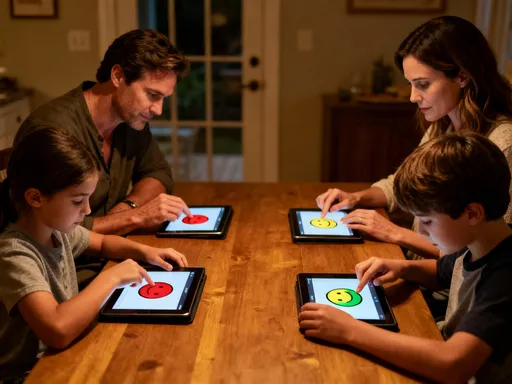
That night, I opened a mood tracking app I’d downloaded months earlier but never used. I’d always thought it was for people with more time, or more emotional energy, or maybe just more drama. But in that quiet moment, I realized our family wasn’t lacking drama—we were drowning in unspoken feelings. I created a shared family profile and invited everyone to log how they felt: just a quick tap, no pressure. My daughter chose a red face. My son picked yellow. My partner and I both went red. The next morning, I pulled up the screen and showed everyone the results. Seeing our moods side by side was like turning on a light in a dark room. We weren’t failing. We weren’t bad parents or difficult kids. We were just out of sync, emotionally exhausted, and trying to keep up with a pace that didn’t leave room for feeling.
That single night changed how we saw ourselves. Instead of reacting to outbursts or withdrawals, we began to anticipate them. We stopped asking, “Why are you so upset?” and started saying, “I see you’re feeling low—what do you need?” It wasn’t a fix, but it was a beginning. The app didn’t heal anything overnight, but it gave us a language we didn’t have before. And in a world where we’re constantly managing schedules, meals, and chores, having a way to check in on our emotional well-being felt like a quiet revolution.
Why Mood Tracking Isn’t Just for Journaling Enthusiasts
I’ll admit, I used to think mood tracking was for people who meditate at dawn, journal with fountain pens, or have therapy appointments every Tuesday. Not for someone like me, who considers folding laundry a win. But what I’ve learned is that mood tracking isn’t about introspection—it’s about awareness. And awareness, especially in a family, is everything. We spend so much time reading schedules, grocery lists, and school newsletters, but we rarely pause to read each other’s emotional cues. The truth is, kids don’t always have the words to say they’re overwhelmed. Teens often shut down instead of speaking up. And adults? We’re usually too tired to notice our own stress, let alone someone else’s.
The app changed that. It turned invisible feelings into something we could see, discuss, and respond to. For example, we noticed that every Sunday evening, my daughter’s mood dipped—low energy, anxious, withdrawn. At first, I assumed it was “back-to-school dread,” but the pattern was too consistent. So we talked. Turns out, it wasn’t school itself—it was the pressure of performances, presentations, and packed after-school schedules that started on Mondays. Once we saw the trend, we adjusted. We started planning low-key Sundays: board games, early dinners, no screens after 7 PM. We even moved her piano practice to Thursdays. The change wasn’t dramatic, but the impact was. Her Sundays became calmer, and so did the rest of the week.
My son, on the other hand, showed a spike in stress every time we had a family event—birthdays, holidays, even movie nights. That surprised me. I thought he loved those moments. But the data didn’t lie. We realized he felt pressure to be “on,” to perform happiness, and to interact with extended family he didn’t see often. So we started giving him an “out”—a quiet room, headphones, a book—so he could step away when he needed to. We didn’t stop having family events, but we made them more inclusive of his needs. The app didn’t tell us what to do, but it gave us the insight to ask better questions. And that made all the difference.
Choosing the Right App: Simplicity Over Features
When we first started, I downloaded every mood tracking app I could find. Some promised AI-powered insights, daily journal prompts, and detailed charts that looked like stock market reports. But they were overwhelming. My 10-year-old didn’t want to write paragraphs about his feelings. My teenager rolled her eyes at anything that felt “therapeutic.” And I just wanted something quick, something that wouldn’t add another task to my already full plate.
What finally worked was the simplest app we tried. No essays. No complex ratings. Just three colors: green for good, yellow for okay, and red for struggling. One tap, and you’re done. The magic was in the shared family view—a dashboard where everyone’s mood appeared as a dot, color-coded and dated. You could see trends at a glance. No one had to explain anything unless they wanted to. And privacy was built in—each person could choose whether to share their mood with the family or keep it private.
The simplicity made it sustainable. We didn’t need to set reminders or argue about participation. Logging became part of our routine—like setting the table or brushing teeth. After dinner, someone would say, “Don’t forget to check in!” and we’d all pull out our phones for five seconds. That tiny habit created a rhythm of emotional check-ins without making it feel like a chore. I learned that the best tech for family life isn’t the fanciest—it’s the one that fits quietly into your day, asking for almost nothing but giving back so much.
Making It a Family Habit: From Resistance to Routine
Of course, it didn’t start smoothly. My son called it “weird” and said, “Feelings aren’t data.” My partner wasn’t convinced either. “We talk already,” he said. “Do we really need an app for that?” I didn’t push. Instead, I started logging my own mood every night and sharing it at the dinner table. “I’m yellow tonight—tired but okay,” I’d say. Or, “Red today—work was rough, but I’m glad to be home.” Slowly, the kids started joining in. First my daughter, then my son. My partner waited a few weeks, but one night, he logged a red and said, “Yeah, I’ve been stressed about the project deadline.” That was the moment I knew it was working.
We kept it simple. No pressure. No follow-up questions unless someone offered more. Just a quick check-in: “How are you feeling—red, yellow, green?” And sometimes, just one word: “tired,” “proud,” “frustrated.” That was enough. Over time, those tiny moments built trust. Now, when someone logs a red, the rest of us naturally respond. “Do you want to talk?” or “Can I take over chores tonight?” or “Want to watch a movie together?” It’s not about fixing anything—it’s about showing up. The app didn’t create empathy; it gave us a way to practice it, every single day.
What surprised me most was how it changed our communication. We stopped guessing. We stopped assuming. If someone was short-tempered, we didn’t jump to conclusions. We’d say, “I saw you logged red yesterday—still feeling off?” And more often than not, they’d open up. Not in a big, dramatic way, but in small, honest ones. “Yeah, I didn’t sleep well.” Or, “I’m worried about the test.” Those conversations might have never happened without the app as a gentle starting point.
Seeing Patterns That Bring Real Change
After six weeks of consistent logging, I pulled up the monthly summary. And there it was—a clear dip in our family’s mood every third week of the month. Not just one person. All of us. Green days were rare. Red and yellow dominated. I stared at the screen, trying to figure out why. Was it the weather? The moon cycle? Then it hit me: overlapping deadlines. My big project at work landed in week three. My partner’s team review was the same week. The kids had midterms and a science fair. Even the dog had a vet appointment. We were all under pressure, but no one had connected the dots.
So we did something radical: we planned for it. We started marking the third week of each month as “low-key week” on the family calendar. No new commitments. No big grocery hauls. Simple meals—pasta, soup, leftovers. We scheduled downtime: Friday movie nights, Saturday morning walks, Sunday puzzles. We protected weekend family time like it was sacred. And slowly, the pattern shifted. The red dots became fewer. The yellows stayed manageable. The greens returned.
The app didn’t change our responsibilities, but it changed how we handled them. We stopped blaming each other for being “snappy” or “distant.” Instead, we said, “It’s week three—we’ve got this.” We started offering help before it was asked for. I’d take over bedtime duty. My partner would handle school lunches. The kids would clear the table without being reminded. We weren’t perfect, but we were more aware. And that awareness turned stress into solidarity. Emotions, once a source of friction, became a signal for support.
Strengthening Connection Without Saying a Word
One of the most powerful moments didn’t involve a conversation at all. My teenage daughter, who rarely talks about her feelings, had been logging “yellow” every Wednesday for three weeks. Not red. Not green. Just yellow. I didn’t ask. I didn’t push. But I noticed. So on Wednesday afternoons, I started leaving a sticky note on her desk: “Thinking of you.” And a small snack—dark chocolate, her favorite granola bar, a thermos of tea. Nothing big. Just a gesture.
Then one day, she came into the kitchen and said, “Thanks for noticing.” That was it. No long talk. No emotional breakdown. Just those four words. But they meant everything. She didn’t need me to fix anything. She just needed to feel seen. The app didn’t tell me what to do, but it helped me see what she needed. And that changed how I showed up for her.
We’ve learned that support isn’t always about talking. Sometimes, it’s about quiet presence. A hug. A meal. A note. The app created space for those moments by making the invisible visible. It didn’t replace conversation—it prepared the ground for it. Now, when she logs a red, I don’t rush in with questions. I say, “I see you’re having a tough day. I’m here if you want to talk—or if you just want silence.” And more often than not, she chooses silence. But sometimes, she says, “Actually, can we sit together?” And we do. No words. Just being.
A Smaller Tool for Bigger Family Peace
We still have tough days. We still argue about chores. We still forget to charge the tablet or pack the gym clothes. But now, we face those moments with more awareness and less blame. Mood tracking didn’t turn us into a perfect family—it made us more human. It didn’t eliminate stress or sadness or frustration. But it gave us a way to see them coming, to name them, and to respond with care instead of reaction.
What started as a simple experiment has become a cornerstone of our family life. We’ve built a culture where everyone feels seen, where emotions aren’t taboo, and where support isn’t assumed—it’s practiced. The app didn’t create connection, but it helped us uncover the connection that was already there, buried under busy schedules and unspoken expectations.
Technology often gets blamed for pulling families apart—endless scrolling, distracted dinners, digital overload. But this experience taught me that tech, when used with intention, can do the opposite. It can help us slow down. Pay attention. Show up. This tiny habit, powered by simple technology, didn’t just help us manage moods—it helped us truly live them, together. And in a world that moves too fast, that might be the most revolutionary thing of all.